
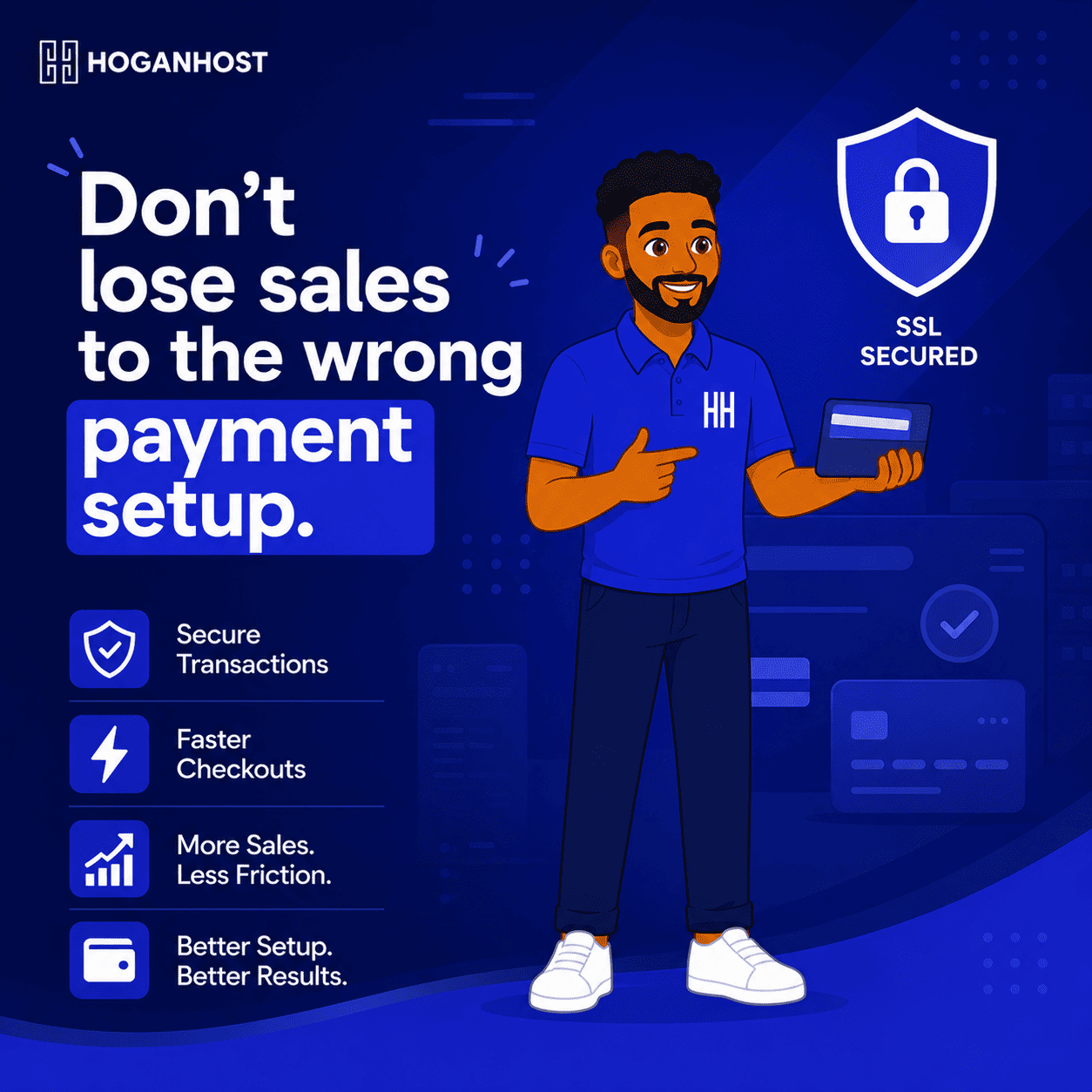
Every Naira you cannot easily collect from a customer is a sale you effectively lose. Choosing the right payment gateway matters just as much as choosing the right products to sell, since it is the final, critical step in every single transaction your business ever makes.
Here is how to actually choose the right one for your specific business.
Step 1: Understand What A Payment Gateway Actually Does
A payment gateway securely processes card payments, bank transfers, and other payment methods on your website or app, then settles the funds into your business bank account. It handles the technical and security complexity of moving money, so you do not have to build this infrastructure yourself.
Step 2: Compare The Real Costs, Not Just The Advertised Rate
Fees directly affect your margins, so understand the actual cost structure before choosing.
- Local card and transfer transactions on major Nigerian gateways like Paystack and Flutterwave typically run around 1.4 to 1.5 percent plus a small flat fee, capped at a maximum of roughly ₦2,000 per transaction regardless of the purchase size.
- Transactions under a certain threshold, often around ₦2,500, frequently waive the flat fee portion entirely on several platforms, which matters if you sell lower-priced items.
- International transactions cost noticeably more, generally in the range of 3.8 to 3.9 percent plus a flat fee, reflecting the higher processing risk and cost involved.
- Newer entrants like Monnify and Squad have introduced competitive pricing in certain areas, particularly for bank transfer-heavy businesses, so it is worth comparing current rates directly rather than assuming the two largest names are automatically the cheapest option for your specific transaction mix.
Step 3: Match The Gateway To Your Customer Base
If your customers are almost entirely Nigerian and paying in Naira, prioritize a gateway with strong local payment method support, including bank transfer and USSD options, since many Nigerian customers prefer these over card payments.
If you expect meaningful international customers, prioritize a gateway with stronger multi-currency and cross-border payment support, since not every local-first gateway handles international transactions equally well.
Step 4: Check Settlement Speed
How quickly funds actually reach your bank account after a sale affects your cash flow directly. Most major Nigerian gateways settle within one business day, though this can vary slightly around weekends and public holidays. Confirm the specific settlement timeline before committing, especially if your business depends on quick access to sales revenue for restocking or operational costs.
Step 5: Confirm Integration With Your Actual Platform
Your chosen gateway needs to work smoothly with whatever platform your business actually runs on.
- If you run a WooCommerce store, confirm the gateway has a mature, well-reviewed official plugin.
- If you run a custom-built website, confirm the gateway offers clear developer documentation and API support.
- If you sell primarily through social media and direct messaging, confirm the gateway offers a simple payment link or invoicing feature that does not require a full website integration.
Step 6: Review The Verification And Setup Requirements
Before you can accept live payments, gateways require a verification process, generally including a Nigerian bank account, basic business details, and completed KYC verification. Compare how straightforward and fast each gateway’s verification process actually is, since a lengthy approval process can delay your launch if not started early.
Step 7: Consider Offering More Than One Gateway
Relying on a single payment gateway means a single point of failure. Occasional downtime or processing issues happen with every provider, and having a backup gateway configured reduces lost sales during those moments rather than losing a customer entirely to checkout frustration.
Many established Nigerian online stores run two gateways side by side, using the second as an automatic or manual fallback when the primary option has an issue.
Step 8: Check Dispute And Chargeback Handling
Ask specifically how each gateway handles disputes and chargebacks, including any associated fees. A gateway with clear, fair dispute resolution processes protects your business better than one where a customer dispute becomes a drawn-out, unclear process.
A Quick Decision Framework
- Primarily local Nigerian customers want the most established, well-tested option: Paystack or Flutterwave.
- Heavy reliance on bank transfer payments specifically: Compare current Monnify or Squad rates for potentially better transfer-specific pricing.
- Significant international customer base: Prioritize a gateway with strong multi-currency support
- Selling primarily through social media without a full website: Prioritize a gateway with simple payment link or invoicing tools
Common Mistakes To Avoid
- Choosing a gateway based only on brand recognition without comparing actual fees for your specific transaction volume and average order size.
- Relying on a single gateway with no backup, losing sales during any downtime or processing issue.
- Ignoring settlement speed, causing unexpected cash flow gaps.
- Delaying KYC verification until launch day, risking a delayed start when you are ready to begin selling.
The right payment gateway is the one that matches your customer base, keeps fees reasonable for your specific transaction pattern, and integrates cleanly with however you actually sell.
Setting up your online store and need hosting that keeps checkout fast and reliable? Get ecommerce-ready hosting from HoganHost and build a payment experience your customers can trust.