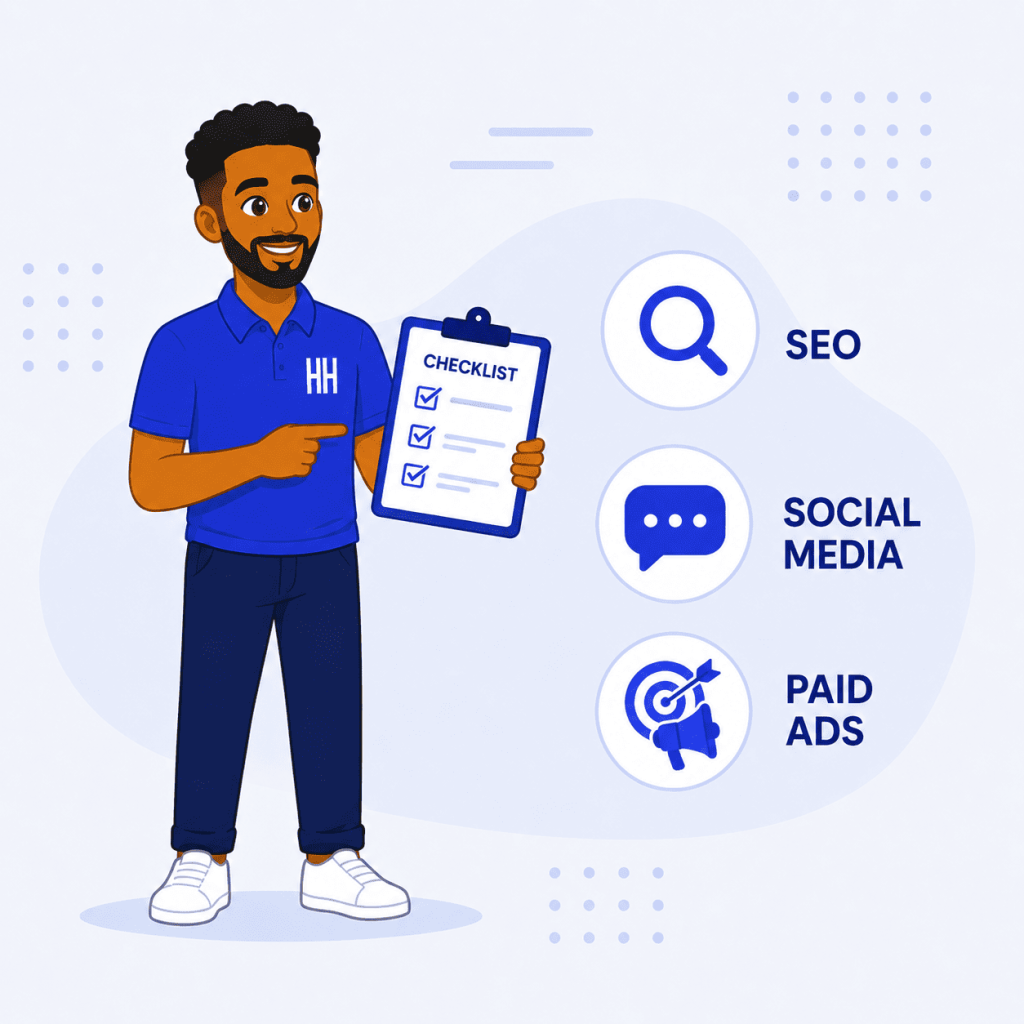
You have limited time, a limited budget, and three completely different marketing channels, all promising results. Choosing where to focus first can genuinely make or break your early growth.
Here is how to actually decide, based on your business situation rather than whichever channel sounds most exciting.
Understand What Each Channel Actually Does Well
SEO (Search Engine Optimization) gets your website found by people already searching for what you offer on Google. It takes time to build momentum, often weeks to months, but it delivers consistent, largely free traffic once established, and that traffic tends to convert well since it comes from people actively looking for a solution.
Social media marketing builds awareness, relationships, and community around your brand, reaching people who may not yet know they need what you offer. It works well for building trust and repeat engagement over time, though converting that engagement directly into sales often takes a more deliberate strategy layered on top.
Paid ads deliver immediate visibility and traffic the moment you start spending, across platforms like Google, Facebook, and Instagram. Results stop the moment you stop paying, but for the right offer and audience, they can generate fast, measurable results while your other channels are still building.
Question 1: How Urgently Do You Need Results?
If you need customers now, this month, paid ads deliver the fastest measurable results, since visibility starts immediately once your campaign goes live. SEO takes considerably longer to show meaningful results, often several months of consistent effort before rankings and traffic build meaningfully.
If you can afford to invest in a longer-term foundation while generating some results elsewhere in the meantime, SEO becomes an increasingly valuable asset the longer you invest in it.
Question 2: What Does Your Budget Actually Look Like?
Paid ads require an ongoing budget to sustain results, since visibility disappears the moment spending stops. SEO and organic social media marketing cost primarily your time and consistency rather than a continuous ad spend, making them more accessible if your budget is tight but you have time to invest instead.
A small business with limited cash but real time to commit often benefits more from prioritizing SEO and social media first, reserving a small, carefully targeted ad budget for testing specific offers once the foundation is in place.
Question 3: Is Your Product Something People Actively Search For?
If people regularly search Google for exactly what you sell, such as “web hosting Nigeria” or “wedding photographer Lagos,” SEO offers a strong, sustainable channel worth prioritizing early, since there is clear existing search demand to capture.
If your product is something people do not typically search for directly, a genuinely new or unfamiliar offering, social media and paid ads often work better initially, since they can introduce your offer to people who were not actively searching for it yet.
Question 4: How Much Content Can You Realistically Produce?
SEO and social media both reward consistent content over time. If you can commit to regular blog posts, social content, or both, these channels compound in value the longer you maintain them.
If content creation is genuinely not sustainable for your team right now, paid ads can carry more of the immediate load while you build capacity for the other channels over time.
The Practical Answer: You Rarely Choose Just One
Most successful small businesses eventually use all three channels together, just with different emphasis depending on their stage and resources.
- Early stage, tight budget, time available: Prioritize SEO and organic social media as your foundation, and reserve any small ad budget for testing specific, high-intent offers.
- Need fast results for a launch or promotion: Layer in paid ads temporarily while your organic channels build in the background.
- Established business with steady cash flow: Run all three simultaneously, letting SEO and social build long-term brand equity while paid ads handle time-sensitive campaigns and specific promotions.
Step-By-Step: A Practical Starting Sequence
- Build your website with basic SEO fundamentals in place from day one, since this cost is largely one-time.
- Establish a consistent presence on the one or two social platforms where your actual customers spend time.
- Test a small, carefully targeted ad budget once you have a specific offer and a landing page ready to convert that traffic.
- Reinvest in whichever channel shows the strongest actual return, rather than splitting attention evenly regardless of results.
Common Mistakes To Avoid
- Expecting SEO to deliver immediate results and abandoning it after a few weeks of limited visible progress.
- Running paid ads without a proper landing page or offer ready to convert the traffic, wasting spend on visitors who arrive but do not act.
- Ignoring social media because it feels slower than ads, missing the long-term trust and community building it provides.
- Splitting a tiny budget evenly across all three channels instead of committing meaningfully to the one or two that fit your business best right now.
There is no single correct order for every business. The right mix depends on your urgency, budget, and how searchable your specific product or service actually is.
Not sure which mix of SEO, social media, and paid ads fits your business best? Get a tailored digital marketing plan from HoganHost built around your actual budget and goals.