
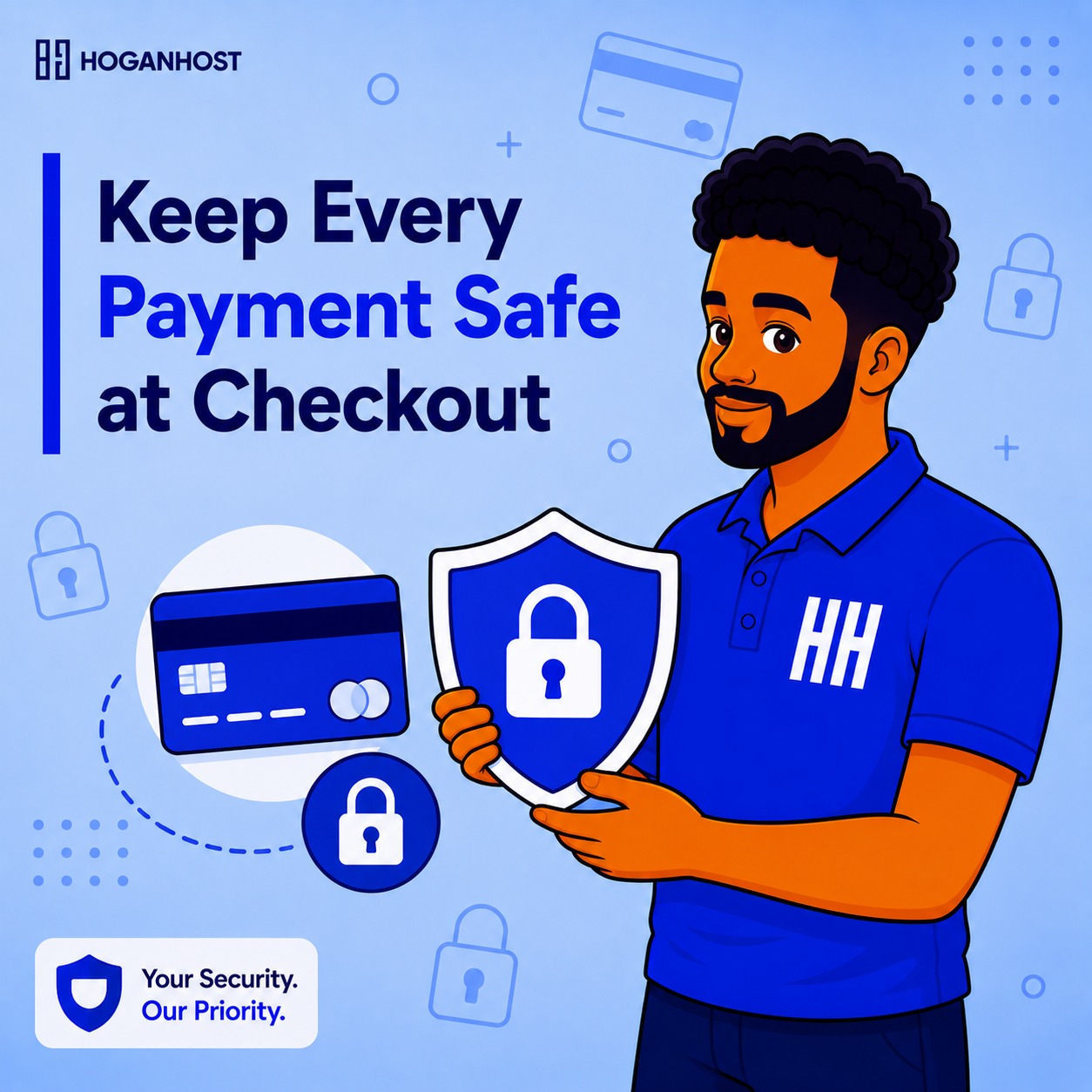
Payment information is the single most sensitive piece of data an online store handles, and customers know it. A store that gets this wrong, whether through a security breach or just an untrustworthy-looking checkout process, loses customers fast, regardless of how good the actual products are.
Protecting payment information involves both genuine technical security and visible signals of trustworthiness that reassure customers during checkout. Here is how to get both right.
Never Handle Raw Card Data Directly
The single most important rule for payment security is straightforward. Your website should never directly store, process, or even temporarily hold full customer card numbers. Reputable payment gateways like Paystack and Flutterwave handle the actual card processing on their own secure, compliant infrastructure, meaning sensitive card details never touch your own server at all.
If any checkout solution asks you to build custom card storage or processing yourself, that is a serious warning sign to avoid entirely. This is not just a best practice recommendation; it is close to a hard requirement under payment card industry security standards that most legitimate gateways are built to comply with automatically.
Confirm Your Payment Gateway Is PCI DSS Compliant
PCI DSS, short for Payment Card Industry Data Security Standard, is the security framework payment processors must follow. Reputable Nigerian gateways maintain this compliance as part of their core service, meaning choosing an established, well-known gateway largely transfers this compliance burden away from your individual business.
Confirm this compliance status directly on the payment gateway’s website or documentation before integrating it into your store, rather than assuming it automatically.
Run the Entire Checkout Process Over HTTPS
Every page involved in the checkout flow, not just the final payment page, needs to run over a valid SSL certificate. A checkout process that starts on an insecure page before redirecting to a secure payment step still creates a moment of vulnerability and undermines customer confidence during the exact moment trust matters most.
Confirm the padlock icon appears consistently throughout the entire purchase journey, from adding an item to cart through to order confirmation.
Display Trust Signals Clearly During Checkout
Beyond actual security, visible trust signals reassure hesitant customers. Displaying recognizable payment gateway logos, a clear SSL padlock indicator, and a straightforward, honest privacy policy all reduce the hesitation that causes cart abandonment at the final step.
Nigerian customers, particularly those newer to online shopping, often look for these visible cues before entering payment details, even if they cannot articulate exactly what technical protection they are looking for.
Limit Data Collection to What Is Actually Necessary
Collecting more customer information than genuinely needed for order fulfillment creates unnecessary risk without adding real value. Review your checkout form and remove any fields that are not actually essential to completing and delivering the order.
Every additional piece of stored customer data is an additional piece of data that could potentially be exposed in the event of a breach, so minimizing collection is itself a form of protection.
Secure Admin Access to Order and Customer Data
While payment card details should never touch your server directly, your store’s admin area still holds customer names, addresses, phone numbers, and order histories. Enforce strong, unique passwords for every admin account, and enable two-factor authentication wherever your ecommerce platform supports it.
Limit access to sensitive customer data strictly to staff who genuinely need it for their role, rather than granting full admin access broadly across a team.
Keep the Ecommerce Platform and Plugins Updated
Outdated ecommerce software and plugins are a common entry point for attackers seeking access to stored customer data. Apply security updates promptly, and remove any unused plugins or extensions that could otherwise sit as an unpatched vulnerability.
Monitor for Fraudulent Transaction Patterns
Payment gateways typically provide fraud detection tools that flag suspicious transaction patterns, such as multiple failed payment attempts from the same source or unusually large orders from a new, unverified customer. Reviewing these flags regularly helps catch fraudulent activity before it results in a costly chargeback.
Building Payment Security Into the Hosting Foundation
Customer payment protection depends heavily on the underlying hosting environment providing genuine security infrastructure, not just the payment gateway integration alone.
HoganHost’s web hosting plans include free SSL certificates, firewall protection, and regular security monitoring, giving Nigerian online stores a secure foundation that supports safe, trustworthy payment processing from checkout through order fulfillment.
Payment security is not a single feature to switch on once. It is an ongoing combination of the right gateway, the right hosting, and consistent good practices that together keep customer trust intact.