

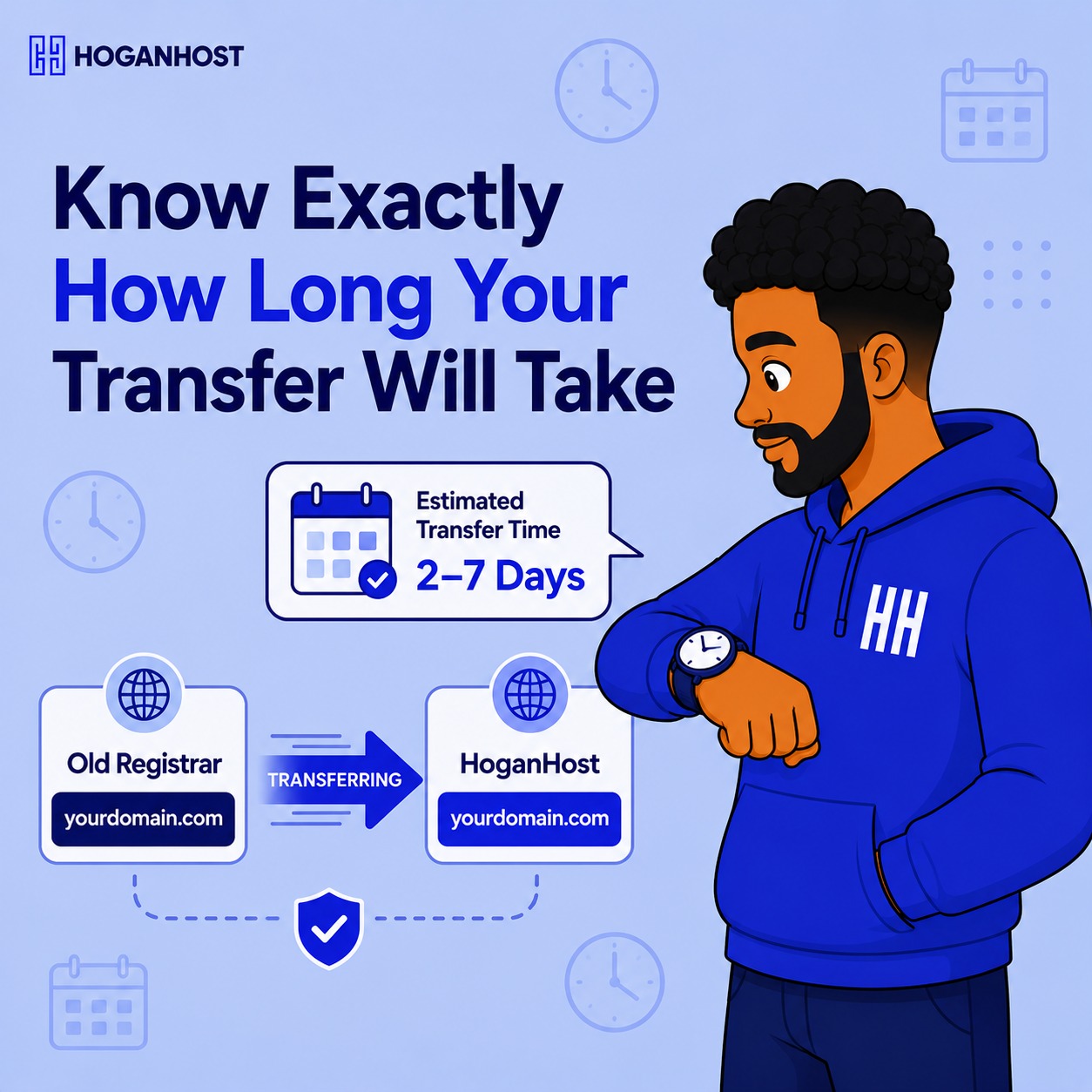
Waiting for a domain transfer to complete without knowing what a normal timeline looks like is genuinely stressful, especially if a website or business email depends on that domain. Is a few hours normal? A week? Is something stuck, or is this just how long transfers take?
The honest answer is that it depends on several specific factors, but there are realistic timeframes worth knowing before you start. Here is what actually affects how long a domain transfer takes.
The Typical Timeframe for Most Extensions
For the majority of generic top-level domains, including .com, .net, and .org, a standard transfer typically completes within 5 to 7 days from when the transfer is properly initiated and approved. This timeframe is largely standardized across registrars due to ICANN policies governing domain transfers.
Some transfers complete faster, sometimes within 24 to 48 hours, if both the losing and gaining registrar process approvals quickly and no delays occur at any step.
What Can Speed a Transfer Up
Approving the transfer confirmation email immediately, rather than letting it sit unopened for days, is one of the simplest ways to speed things along. Some registrars also offer an option to expedite the transfer by skipping the standard waiting period entirely, provided the current registrar approves this immediately rather than the transfer defaulting to the full waiting window.
Having the correct authorization code, sometimes called an EPP code, ready and accurate from the very first attempt avoids a failed transfer request that would otherwise need to be resubmitted, adding unnecessary delay.
What Can Slow a Transfer Down
An incorrect or expired authorization code causes an immediate failure, requiring the process to restart from the beginning once a valid code is obtained. Domain locking, a security feature that prevents unauthorized transfers, needs to be manually disabled at the current registrar before a transfer request can even be submitted, and forgetting this step is a common cause of unexpected delay.
A domain within 60 days of its original registration date, or within 60 days of a previous transfer, is typically ineligible for another transfer under standard ICANN policy, meaning the process cannot begin at all until that window passes.
Failing to approve the transfer confirmation email within the response window, often 5 days, can result in the transfer request expiring, requiring the entire process to be initiated again from scratch.
Country Code Domains Often Take Longer
Nigerian .ng and .com.ng domains, along with many other country code extensions worldwide, do not follow the same standardized ICANN transfer policy that applies to .com and similar generic extensions. Transfers for these can take longer, sometimes extending to two or three weeks depending on the specific registrars involved and how quickly manual verification steps are completed.
If time sensitivity matters for a business relying on a .ng domain, building in extra buffer time beyond the typical five to seven-day estimate for generic extensions is a realistic precaution.
What Happens to the Website During a Transfer
As long as nameservers remain unchanged throughout the transfer process, the website and any associated email should continue functioning normally for the entire duration, regardless of how many days the transfer itself takes to formally complete. The transfer changes who administratively manages the domain, not where it currently points.
This is worth confirming directly with your specific registrars, since website interruption during a transfer usually stems from an unrelated nameserver change made at the same time, rather than the transfer process itself causing any disruption.
Realistic Planning Around a Transfer
Given the typical five to seven day window for most domains, and potentially longer for .ng extensions, avoid initiating a transfer immediately before a time-sensitive business event, a product launch, a major marketing campaign, or anything else where domain-related uncertainty would be genuinely disruptive.
Starting the transfer with a comfortable buffer, at least two to three weeks before any deadline that matters, accounts for both the standard timeline and any unexpected delays along the way.
Getting Support During a Transfer
A transfer that seems stuck longer than expected is worth actively investigating rather than simply waiting indefinitely, since a resolvable issue like an incorrect authorization code or an unapproved confirmation email is often the actual cause.
HoganHost’s domain transfer service provides support throughout the transfer process, helping identify and resolve delays quickly rather than leaving domain owners guessing about what is actually happening behind the scenes.
A domain transfer is rarely instant, but knowing the realistic timeline in advance turns an anxious waiting period into a predictable, manageable process.