Every job posting wants proof of past work. Every past client wants proof you’ve done this before. So where does anyone actually start?
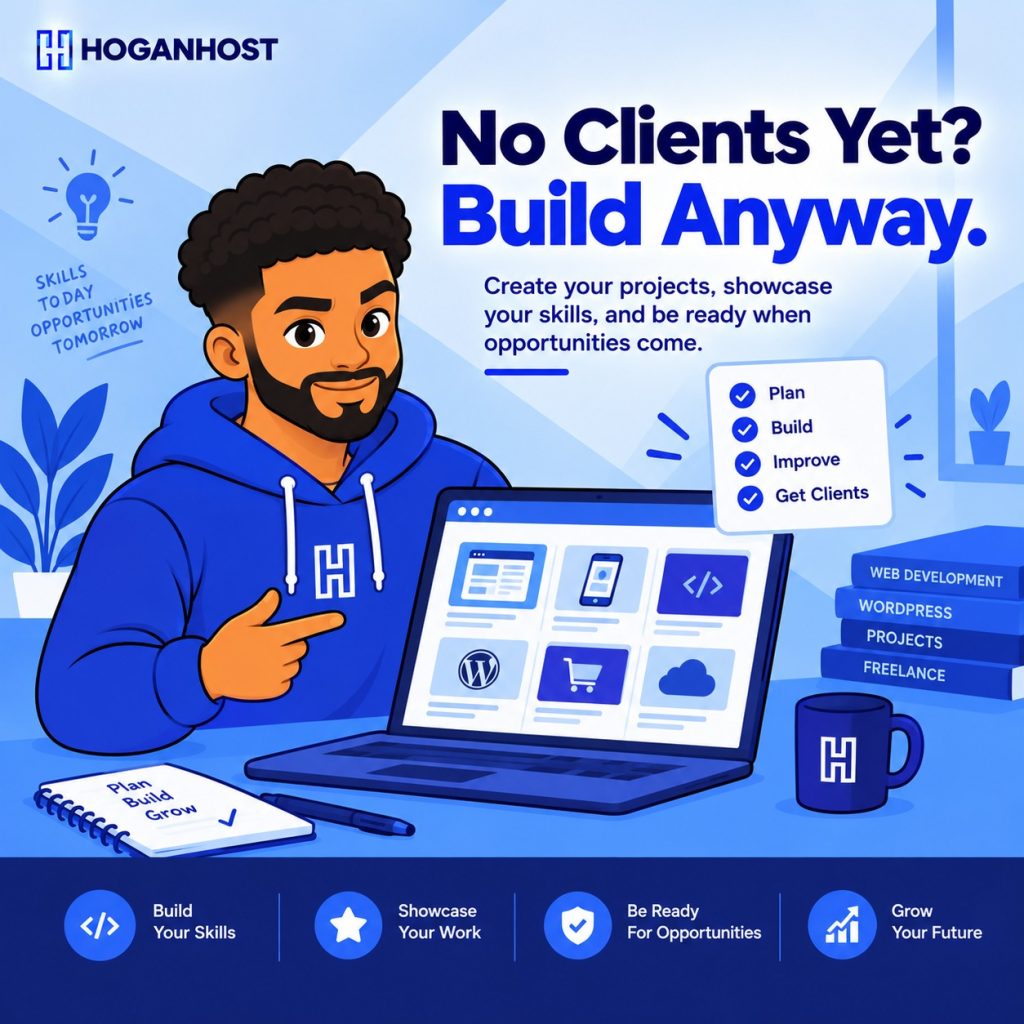
This is the trap almost every beginner in digital skills, design, writing, or development runs into. The good news is a portfolio doesn’t require paying clients. It requires proof that you can actually do the work.
Stop Waiting for Permission to Build Something
The biggest mindset shift is realizing a portfolio isn’t a record of jobs you’ve been hired for. It’s a preview of what you can do and how you think. Nobody is stopping you from creating that proof yourself, right now, today.
Start With Real Projects, Not Fake Ones
- Build something you’d actually use. A budgeting spreadsheet, a small website for a made-up business, a redesigned version of an app you use daily.
- Audit a well-known brand. Pick a company everyone recognizes and point out three specific things you’d fix on their website, social media, or SEO. This shows real skill applied to something people already understand.
- Solve a problem for someone you know. Offer a free or heavily discounted project to a friend or family member’s small business, and be upfront that you’re doing it to build your portfolio.
Each of these gives you a real example to show, not a hypothetical description of skills you claim to have.
Document the Thinking, Not Just the Result
A finished project alone doesn’t tell the full story. For each piece in your portfolio, briefly explain:
- What the problem or goal was
- What choices you made and why
- What the outcome looked like, even if it’s a personal project with no real client metrics
This turns a simple screenshot into proof that you understand the reasoning behind good work, not just the execution.
Where to Actually Put It
A personal website is generally the strongest long-term option. It looks professional, it’s fully yours, and it can grow with you as you add real client work later.
- Designers and visual creators often use visual-first platforms alongside a website.
- Writers can start with a simple blog or a few published sample pieces.
- Developers should link to working demos, not just code repositories nobody outside the field will understand
Whatever platform you choose, keep it simple and easy to navigate. A confusing portfolio undermines the very skills you’re trying to demonstrate.
Replace Spec Work as Real Clients Come In
Your first portfolio doesn’t need to be permanent. The moment you land a real paying client, add that project and quietly retire one of your practice pieces. A portfolio should keep evolving, never sitting frozen from your very first attempt.
Skills First, Portfolio Second
None of this works without the underlying skill actually being solid. If you’re still building your foundation in web hosting, website management, design, or digital marketing, it’s worth investing time there before worrying too much about presentation.
HoganHost Academy offers structured training in web hosting, website management, and digital skills, giving you real, practical projects you can turn straight into portfolio pieces while you learn.