A consultant, a cleaning company, and a photography studio walk into the same marketing meeting. If they all use the exact same strategy, at least two of them are wasting money.
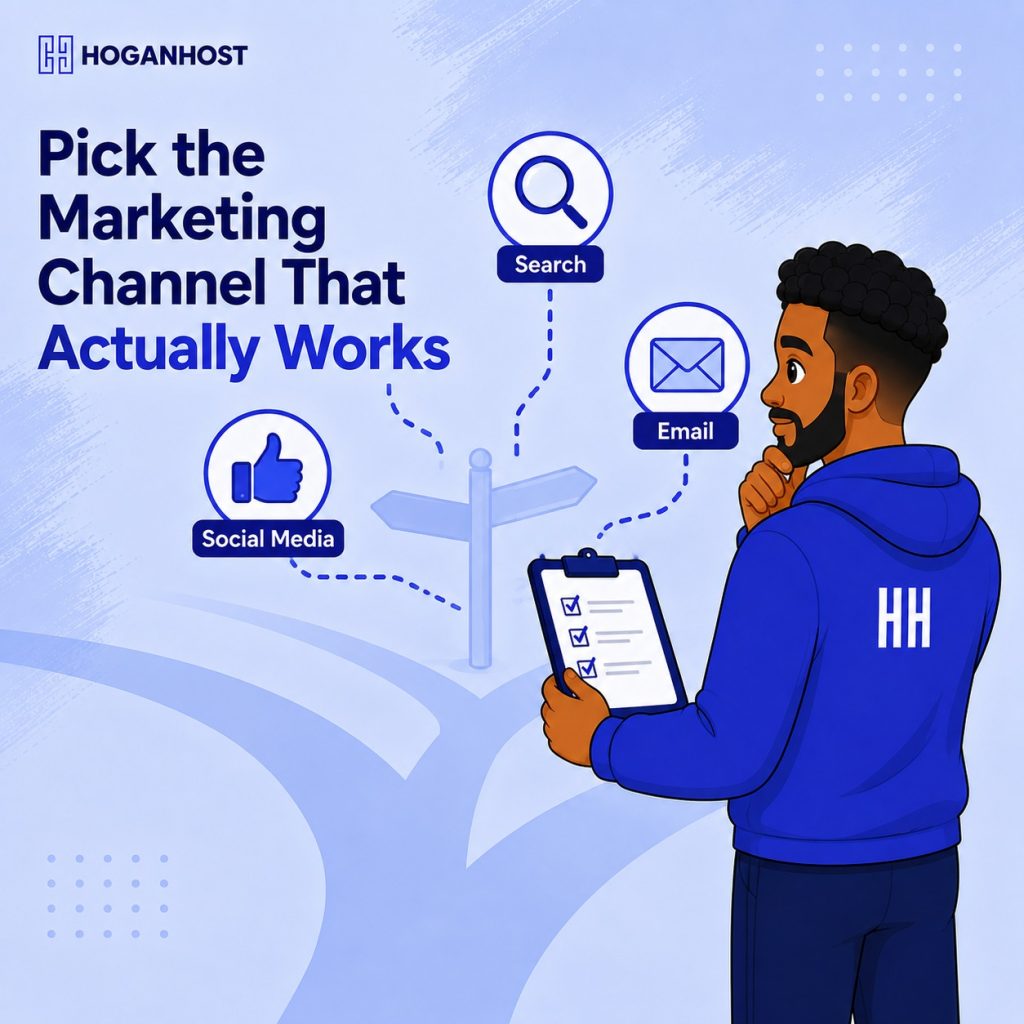
Service businesses are not all the same, and neither is the audience buying from them. Choosing the right marketing channel starts with understanding how your specific customers actually search for and decide on a service.
Start With How Customers Search for You
Some services get discovered through active search. Someone with a plumbing emergency or a legal question types their problem straight into Google, looking for an immediate answer. For these businesses, search engine optimization and local search visibility matter enormously.
Other services get discovered through discovery and trust building instead. A wedding photographer or interior designer rarely gets found through a panicked Google search. Customers browse Instagram or Pinterest, save what they like, and reach out when they are ready.
Ask a simple question before choosing any channel: is my customer searching with urgency, or browsing with intent to decide later? The answer points directly to the right channel.
Whichever channel wins the customer’s attention first, they usually confirm their decision by checking your website. A professionally hosted website that loads fast and looks credible closes the loop that marketing opens.
Match the Channel to the Service Type
High urgency, local services (plumbers, electricians, mechanics, locksmiths)
Local SEO and a well-optimized Google Business Profile usually outperform social media here. Customers want the nearest, fastest, most trustworthy option right now.
Visual, trust-based services (photographers, event planners, interior designers, fashion stylists)
Instagram and similar visual platforms work well because the service is essentially being sold through portfolio quality.
Professional and B2B services (consultants, accountants, legal services, agencies)
LinkedIn and email marketing tend to perform better than consumer social platforms. Decision makers in this space respond to credibility and direct outreach more than flashy visuals.
Recurring, subscription-style services (cleaning, maintenance, tutoring)
Referral programs and email marketing shine here, since repeat business and word of mouth carry more weight than a single ad seen once.
Do Not Spread Thin Across Every Platform
A common mistake for small service businesses is trying to maintain a strong presence on every platform at once. This usually results in a weak presence everywhere instead of a strong one anywhere.
Pick one or two channels that genuinely match how your customers search and decide. Get good at those before expanding.
Test Small Before Committing a Full Budget
Before committing serious marketing spend to any single channel, run a small test. A modest ad budget, or a few weeks of consistent organic posting, will tell you fairly quickly whether a channel is actually reaching the right people.
Track a simple metric: how many genuine inquiries came from that channel, not just likes or impressions. Vanity numbers do not pay bills.
Combine Channels as the Business Grows
Once one channel proves itself, layering in a second one, such as pairing local SEO with a Google Business Profile, or Instagram with email follow-ups, tends to compound results rather than dilute them.
For service businesses unsure where to start or how to structure a channel strategy that fits their specific customer base, HoganHost’s digital marketing team can help map out a plan built around real search behavior and competitor research rather than guesswork.
The right channel is the one where your actual customers already are, not the one that looks impressive on a slide deck.