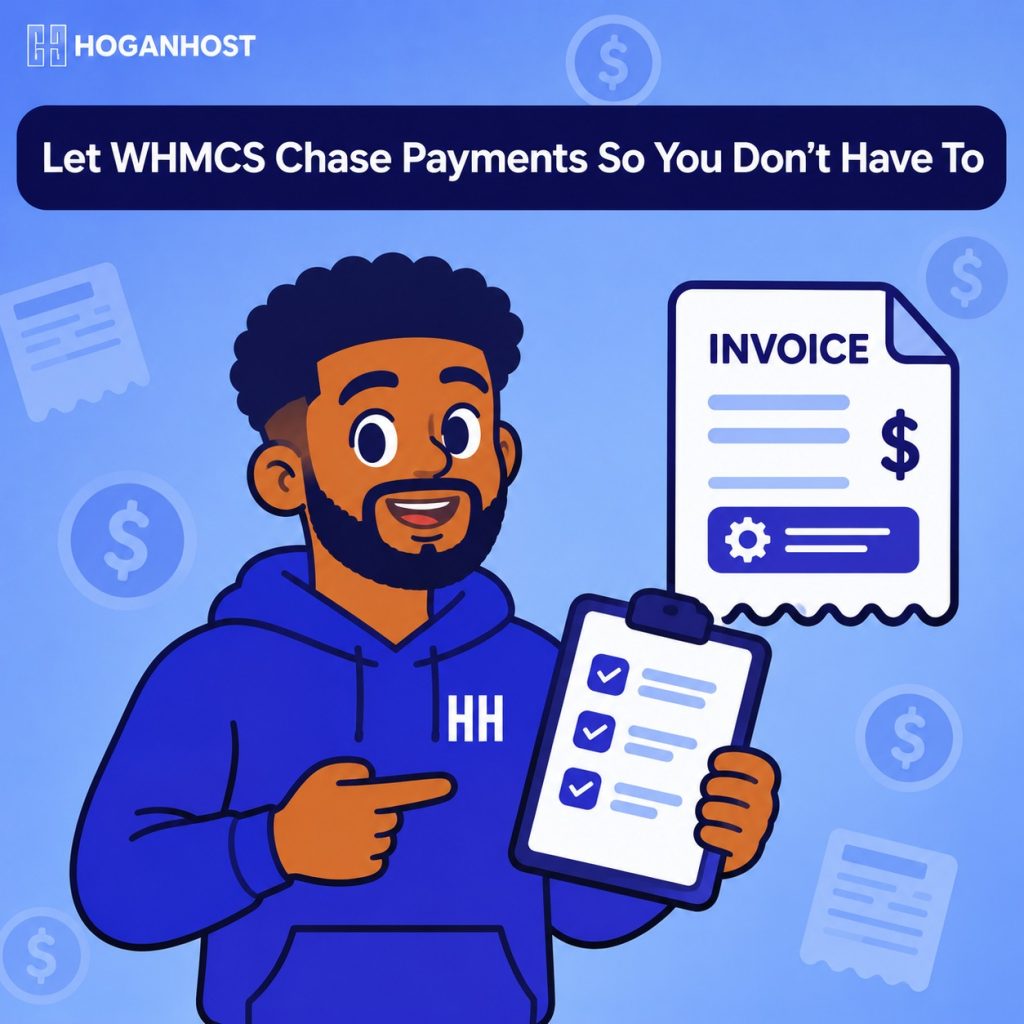
Chasing customers for payment every month is one of the least enjoyable parts of running a reseller hosting business. WHMCS exists to remove that chore entirely, handling invoicing, payment collection, and account suspension for non-payment without you lifting a finger each billing cycle.
For a Nigerian hosting reseller managing even a handful of clients, setting this up properly early on saves hours of manual admin work every single month.
What WHMCS Actually Does
WHMCS is billing and client management software built specifically for hosting businesses. It connects to your WHM reseller account, automatically creates invoices based on each client’s plan, sends payment reminders, processes payments through a connected gateway, and can automatically suspend or terminate accounts that fall behind on payment.
Once configured correctly, a new customer sign-up can go from order to a live, billed hosting account without any manual intervention from you.
Setting the Currency to Naira First
One of the most common setup mistakes Nigerian resellers make is leaving WHMCS on its default USD currency. Before adding products or clients, switch this under Setup, then Currencies, changing the default currency to NGN.
Pricing everything directly in naira avoids confusing exchange rate calculations for customers and keeps your invoices matching what customers actually expect to pay.
Connecting a Nigerian Payment Gateway
Automatic billing only works if WHMCS can actually collect payment without you manually confirming each transaction. Paystack is the most common choice for Nigerian resellers, since it supports cards, bank transfers, USSD, and mobile money in one integration.
Install the Paystack payment gateway module inside WHMCS, add your API keys from your Paystack dashboard, and set it as an accepted payment method. Once connected, WHMCS can charge saved cards automatically for recurring invoices, or generate a payment link for one-time bank transfers.
Setting Up Automated Billing Cycles
Inside WHMCS product configuration, each hosting package can be assigned a billing cycle, whether monthly, quarterly, or annually. WHMCS automatically generates the next invoice ahead of the due date based on this cycle, without requiring manual creation each time.
Configure your invoice reminder settings under Setup, then Automation Settings, to control how many days before and after the due date reminder emails go out. A typical setup sends a reminder a week before the due date, another on the due date itself, and a final notice a few days after, before any suspension action triggers.
Automating Suspension for Non-Payment
WHMCS can automatically suspend a hosting account through its cPanel or WHM integration when an invoice goes significantly overdue, and reactivate it automatically once payment clears. This removes the awkward, time-consuming task of manually chasing and then manually suspending non-paying clients.
Set a reasonable grace period before suspension triggers, since accidental card declines or delayed bank transfers happen even with paying customers who intend to settle their bill.
A Common Gap Nigerian Resellers Miss
WHMCS does not support the .ng domain extension by default. If you plan to sell .ng domains alongside hosting, this requires a separate WHOIS configuration update, since the standard WHMCS setup will not correctly check .ng domain availability without it.
Getting Reseller Billing Right From Day One
Automated billing through WHMCS is one of the features that makes reseller hosting genuinely scalable rather than a manual administrative burden that grows with every new client.
HoganHost’s reseller hosting plans include WHMCS as part of the package, giving new resellers the billing infrastructure needed to manage clients professionally from the very first sale.
Getting the currency, payment gateway, and automation settings configured correctly at the start means billing runs quietly in the background while you focus on actually growing the business.