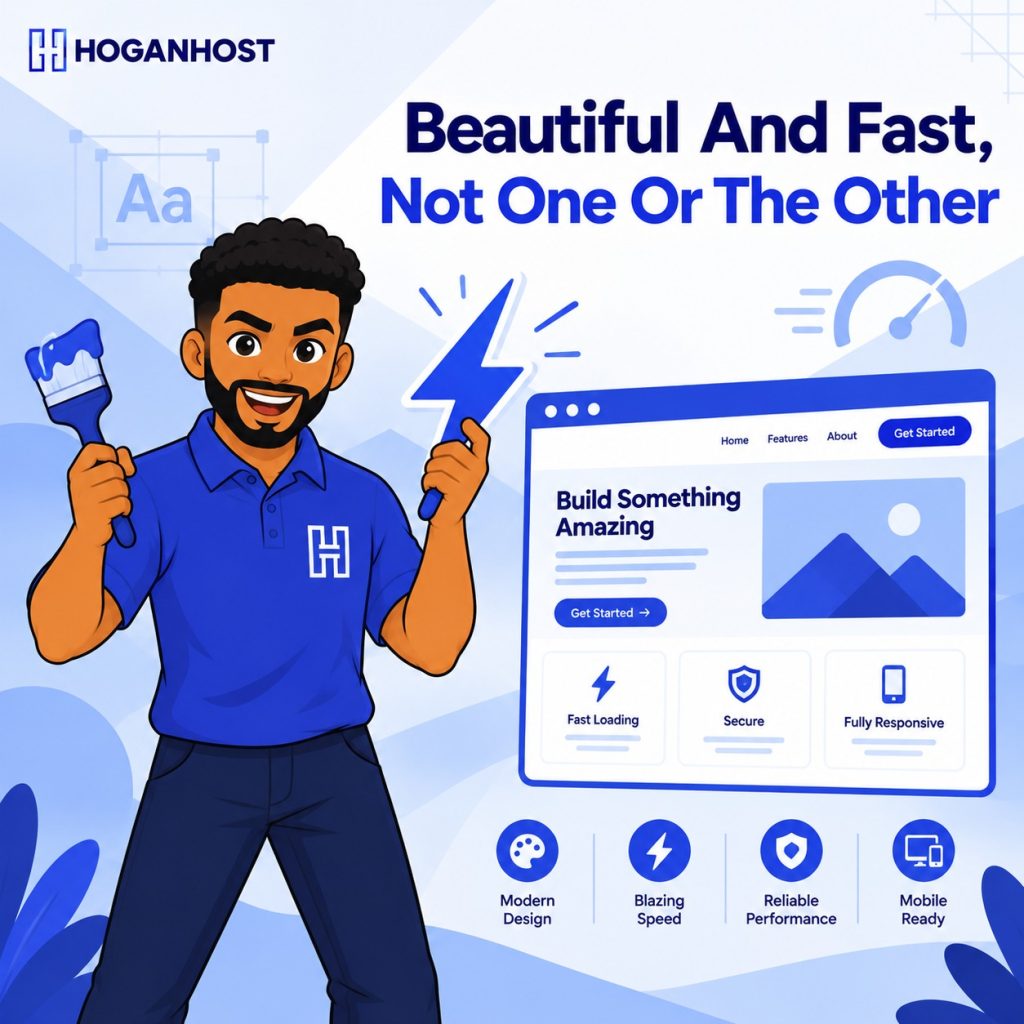
Business owners often feel forced to pick a side. Either the website looks stunning and takes forever to load, or it loads instantly and looks plain and forgettable. That trade-off is not actually necessary, and the businesses winning online right now are the ones that refuse to accept it.
Here is how to build a website that genuinely does both.
Speed Is Now Part of Good Design, Not Separate From It
Visitors form an opinion about a website within milliseconds, long before they read a single word or understand what you offer. If that first moment involves waiting for a page to load, the impression is already negative before your design even gets a chance to make its case.
A significant share of visitors abandon a site entirely if it is poorly designed or simply feels slow and unresponsive. Speed and visual appeal are not competing goals. They are two halves of the same first impression.
Start With a Clean, Purposeful Layout
Minimalism, done well, genuinely helps both speed and appearance at the same time. Sufficient white space, clear typography, and a limited color palette reduce visual clutter while also reducing the amount of code and assets a page has to load.
Avoid the temptation to fill every inch of the page. A focused layout with clear hierarchy loads faster and communicates your message more effectively than a busy page trying to say everything at once.
Optimize Every Image Before It Goes Live
Images are usually the single biggest factor slowing a beautifully designed website down. Compress every image before uploading, use modern formats like WebP, and size images to match exactly where they display, rather than uploading a full-resolution photo for a small thumbnail.
None of this requires sacrificing visual quality. Done correctly, compressed images look identical to the original while loading in a fraction of the time.
Choose Fonts and Effects Carefully
Custom fonts and decorative animations add personality to a design, but each one comes with a real performance cost. Limit yourself to one or two font families, and use animations sparingly, reserving them for moments that genuinely add value rather than decorating every scroll and hover.
Micro interactions, small subtle animations that respond to a click or hover, can make a site feel more polished and human when used thoughtfully. Overused, the same technique just slows everything down for little added benefit.
Build Mobile First, Not as an Afterthought
The majority of web traffic now happens on mobile devices, and a design that starts on desktop and gets squeezed down afterward almost always shows the seams. Designing for a small screen first forces genuinely necessary decisions about what actually belongs on the page, which naturally produces a leaner, faster site.
Responsive design, using flexible layouts that adapt to any screen size, is no longer optional. It is the baseline expectation for a professional website in 2026.
Use Caching and a CDN Behind the Scenes
Good visual design lives on the front end, but real speed depends heavily on what happens behind it. Caching lets your server serve a saved version of a page instead of rebuilding it from scratch every time, and a content delivery network shortens the distance your content has to travel to reach each visitor.
Neither of these compromises how your site looks. They simply make sure the design you worked hard on actually reaches visitors quickly.
A Simple Framework to Follow
- Design with restraint first, choosing a clean layout before adding decorative extras.
- Compress every visual asset, treating this as a required step, not an optional cleanup task.
- Test on an actual phone, not just a browser’s mobile preview mode.
- Limit animations and custom fonts to what genuinely improves the experience.
- Pair your design with fast, reliable hosting, since even a perfectly optimized front end depends on the server behind it.
Why the Hosting Choice Still Matters
A gorgeous, well-optimized website can still load slowly if the server behind it is overloaded or poorly configured. Design and hosting work together, and neither one fully compensates for weaknesses in the other.
Ready for a website that looks professional and loads the way it should? HoganHost’s web design team builds clean, fast, mobile-friendly websites for Nigerian businesses, backed by hosting infrastructure built to keep that design performing the way it was meant to.